
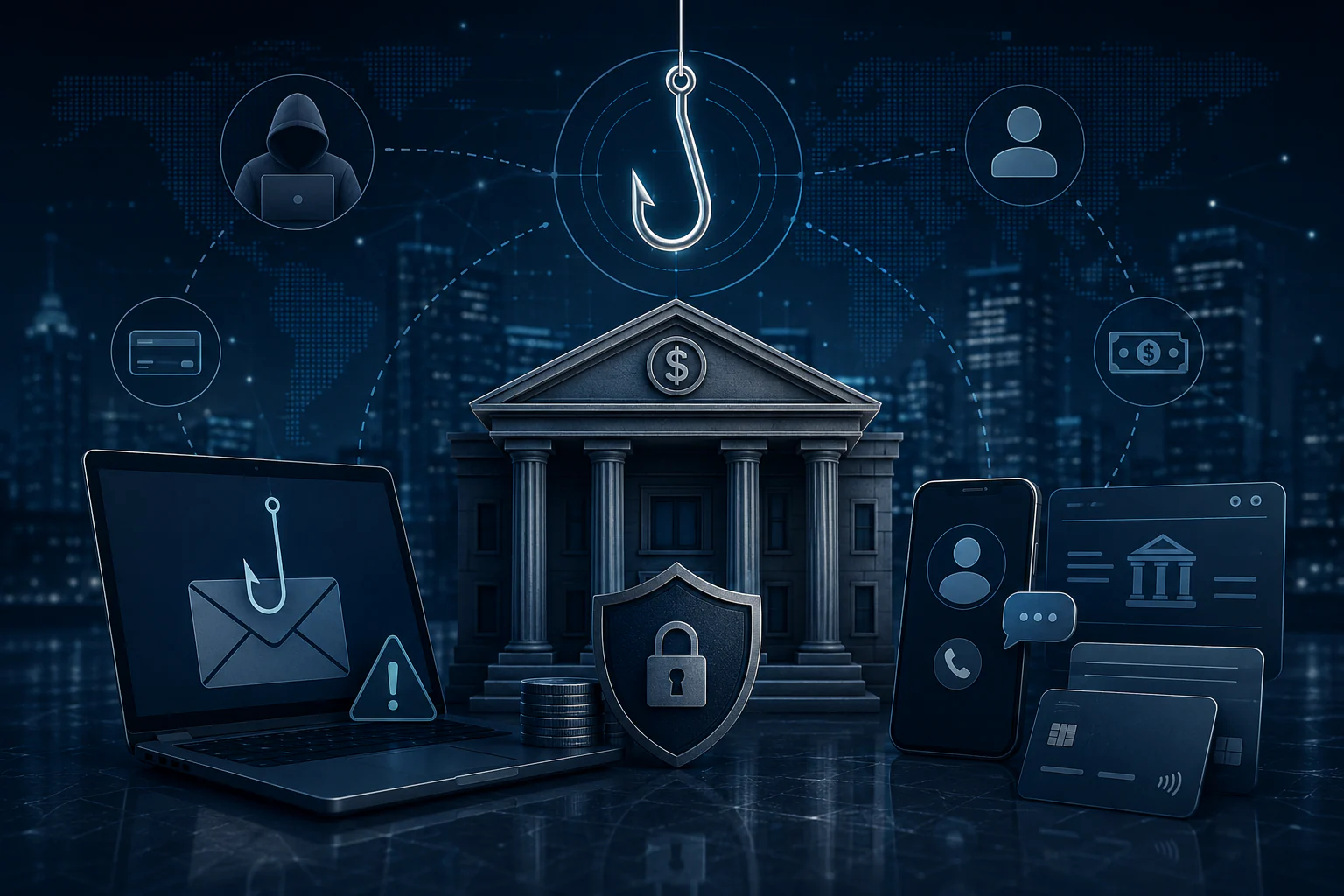
Phishing Simulation in Banking: What Regulators Now Expect
Phishing remains one of the most common entry points for cyber incidents in banking. What has changed is not the existence of the threat, but how seriously regulators now treat your response to it.
Key Insight
“Phishing simulation is no longer optional. Regulators treat it as evidence of control.”
Across jurisdictions, banking regulators increasingly expect institutions to demonstrate, not merely document, how their people respond to social-engineering attacks.
Why Phishing Remains a Central Concern in Banking
Banks operate in an environment defined by trust, authority, and time‑sensitive decisions. These characteristics also make them highly attractive to attackers.
Modern phishing attacks target:
- Payment and treasury functions
- Helpdesk and identity workflows
- Senior executives and delegated approvers
- Third‑party and shared service teams
“Rather than exploiting software vulnerabilities, attackers increasingly exploit legitimate business processes performed under false pretenses.”
What Banking Regulators Expect, Globally
While regulatory language differs across jurisdictions, supervisory expectations around phishing and social engineering are remarkably consistent. Regulators are no longer satisfied with policies, awareness slides, or annual training attestations.
They increasingly expect financial institutions to demonstrate how well their people respond to real-world social-engineering scenarios, especially those involving urgency, authority, and financial decision-making.
- Identify phishing and impersonation as material risks
- Implement controls to reduce the likelihood and impact of such attacks
- Test those controls in practice, not just document them
- Demonstrate ongoing improvement based on evidence, not assumptions
In this context, phishing simulation is not viewed as an optional awareness exercise. It is increasingly treated as a means of validating human‑centric controls, much like penetration testing validates technical security.
Why Traditional Phishing Programs Fall Short
Many banking phishing programs struggle because they were designed for a different threat landscape. These gaps matter because attackers deliberately target exactly those blind spots.
Common limitations include:
- Email‑only simulations, while real attacks are multichannel
- Generic templates that do not reflect banking workflows
- Infrequent testing that becomes predictable
- Limited focus on privileged or high‑impact roles
- Inconsistent coverage across regions or outsourced teams
These gaps matter because attackers deliberately target exactly those blind spots.
What Effective Phishing Simulation Looks Like in Banking Today
Banks that perform well under regulatory scrutiny share a common approach: they treat phishing simulation as a continuous risk-management activity, not a once-a-year program. The objective is not to catch employees out, it is to stress-test decision-making in realistic conditions.
- Threat-Mirroring Scenarios – Scenarios that reflect actual banking attack patterns, impersonation, urgency, authority spoofing.
- Role-Specific Testing – Targeted programs for finance teams, helpdesks, senior leaders, and third-party operators.
- Multichannel Simulations – Email, voice, and collaboration-platform scenarios that reflect how modern attacks actually unfold.
- Evidence-Driven Improvement – Measurable outcomes linked directly to training interventions and documented control improvements.
How PhishPrep Helps
PhishPrep is designed to help banks align phishing simulation with modern regulatory expectations, without turning it into a compliance burden.
It enables organizations to run realistic phishing simulations that reflect how attacks actually occur, including voice‑based phishing and multi‑channel scenarios. Purpose‑built templates are designed to test banking‑specific workflows, such as identity recovery, payment verification, and executive impersonation.
Banks prefer on-premises phishing simulation product to keep their data within air-gapped network. PhishPrep can be deployed on-premises, Private cloud, and dedicated SaaS model as well
With multilingual capabilities and support for globally distributed and outsourced teams, PhishPrep allows banks to assess cybersecurity readiness consistently across regions and operating models. Short, targeted knowledge‑nugget training reinforces learning immediately after simulations, helping translate insight into behaviour.
From Awareness to Evidence